From the field
Finding a Hidden Ambulance Oxygen System Leak
Anderson Fleet Service · Kinsman, OH
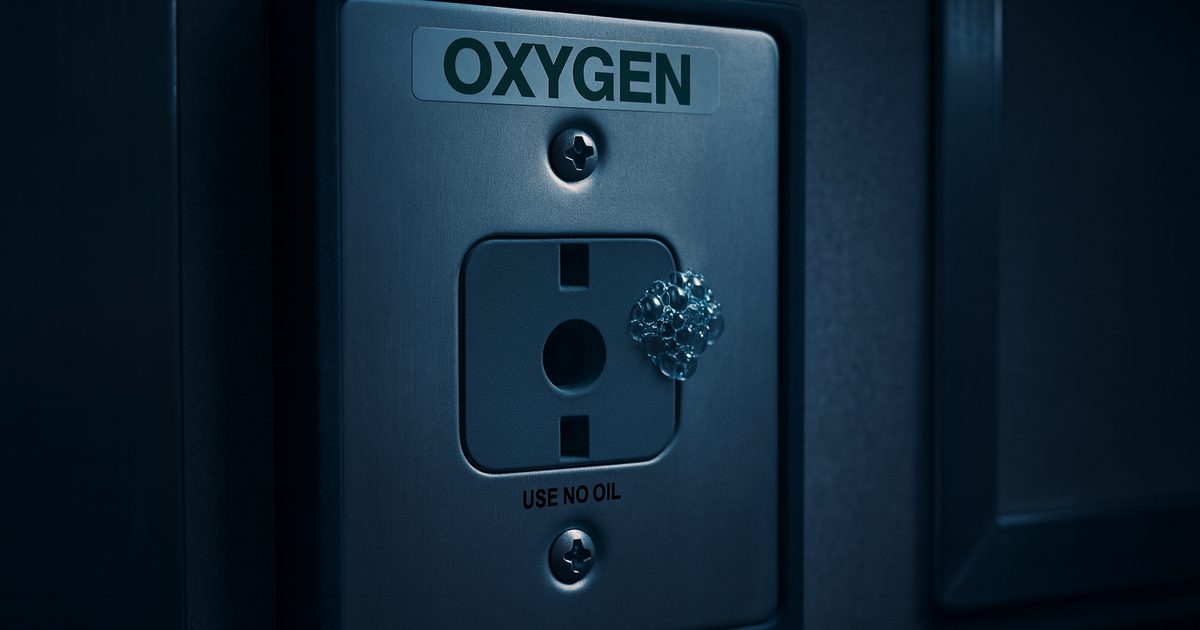
A recent ambulance repair that shows why a proper leak test matters.
I recently worked on an 11-year-old ambulance that had a significant oxygen system leak. The customer had been unable to locate the source of the leak, so I performed a complete inspection of the oxygen delivery system to track it down.
I started by pressurizing the oxygen system and checking the oxygen cabinet. I applied a leak-detection solution to the lines, fittings, and connections throughout the cabinet. There were no visible bubbles or obvious leaks in that area.
Since the leak was still present, I continued working downstream through the system.
I removed each of the ambulance’s oxygen wall outlets and inspected the connections behind them. That’s where the problem became apparent.
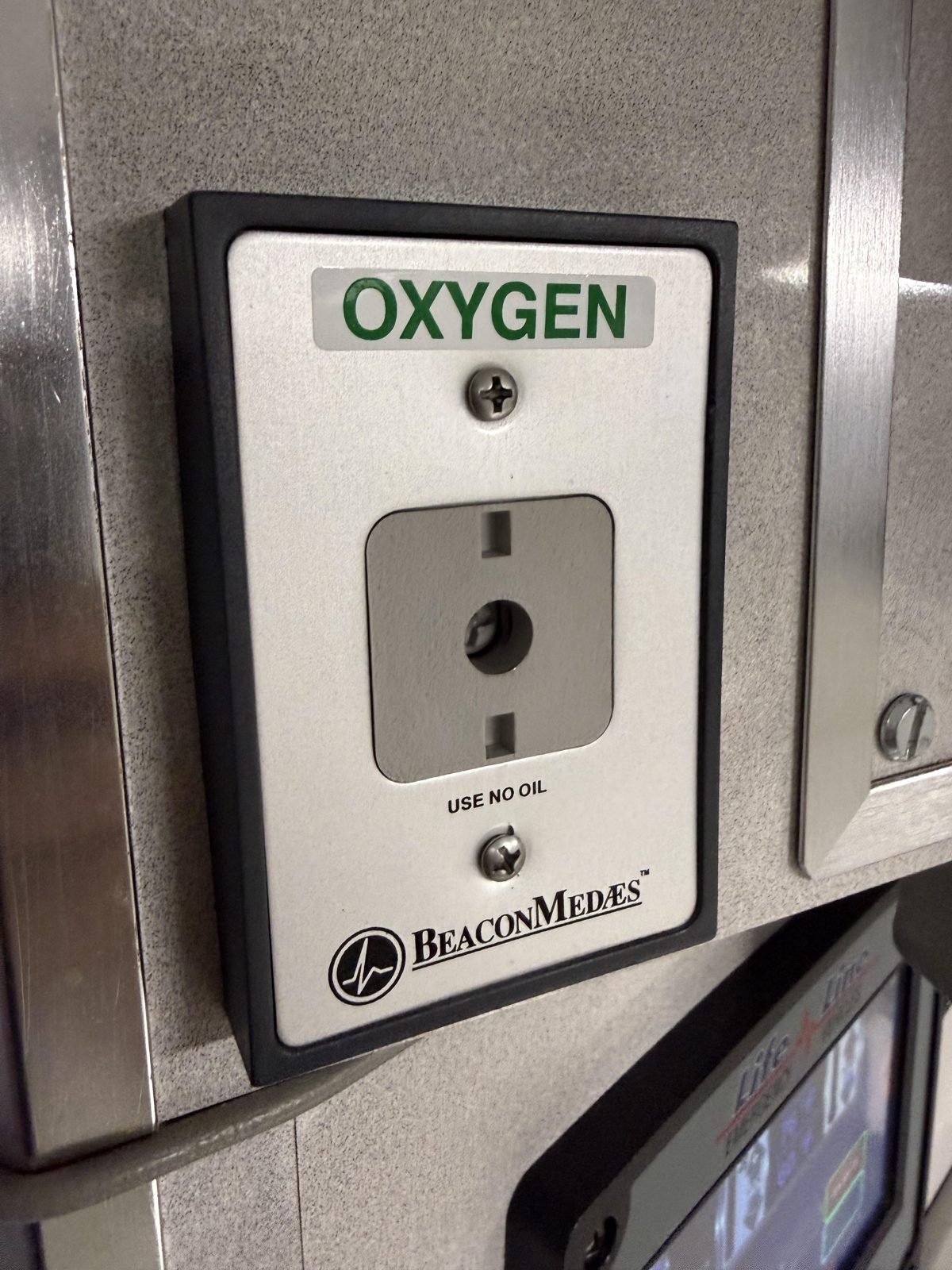
Every oxygen outlet was leaking.
The outlets were leaking in multiple locations, both around the face of the receptacle and at the connection where the clamp and hose attach to the back of the outlet. I also found leaking T-fittings in the oxygen lines.
I then checked the operation of the oxygen bypass solenoid. The solenoid is designed to shut off oxygen flow to the outlets electronically when the ambulance is powered down. During testing, I found that the solenoid was no longer sealing completely and was slowly allowing pressure to bleed through to the oxygen outlets even when it was supposed to be closed.
Why the leak wasn’t obvious
This ambulance is approximately 11 years old, and based on what I found, the oxygen outlets had likely been leaking for quite some time.
The failing bypass solenoid helped hide the problem until it became a noticeable issue. Once the system was supposed to shut down, the defective solenoid continued allowing pressure into the outlet circuit, making the existing leaks much more apparent.
This is a good example of why simply checking the oxygen cabinet or looking for an obvious leak isn’t always enough. Oxygen systems on older ambulances can have multiple leak points, particularly around frequently used outlets, fittings, and connections.
The repair
I replaced all of the leaking oxygen outlets and replaced the defective oxygen bypass solenoid.
After completing the repairs, I pressurized the system and performed another complete leak test.
The system held pressure perfectly.
This repair required more than simply finding one bad fitting. By systematically isolating and testing the entire oxygen system, I was able to identify multiple leaking outlets as well as a bypass solenoid that was no longer sealing properly.
For older ambulances, oxygen system leaks can develop gradually and may not always be found where you initially expect them. A thorough pressure and leak inspection can prevent wasted diagnostic time and ensure the system is functioning the way it should. If you’ve got a rig that won’t hold oxygen pressure, give us a call.
Rig down? Talk to the tech directly.
On-site ambulance electrical, equipment, and eLock work across Ohio and Pennsylvania. You reach Phil, not a call center.