On-site ambulance repair
On-Site vs. In-Shop Ambulance Repair: Which Saves More Downtime?
Anderson Fleet Service · Kinsman, OH
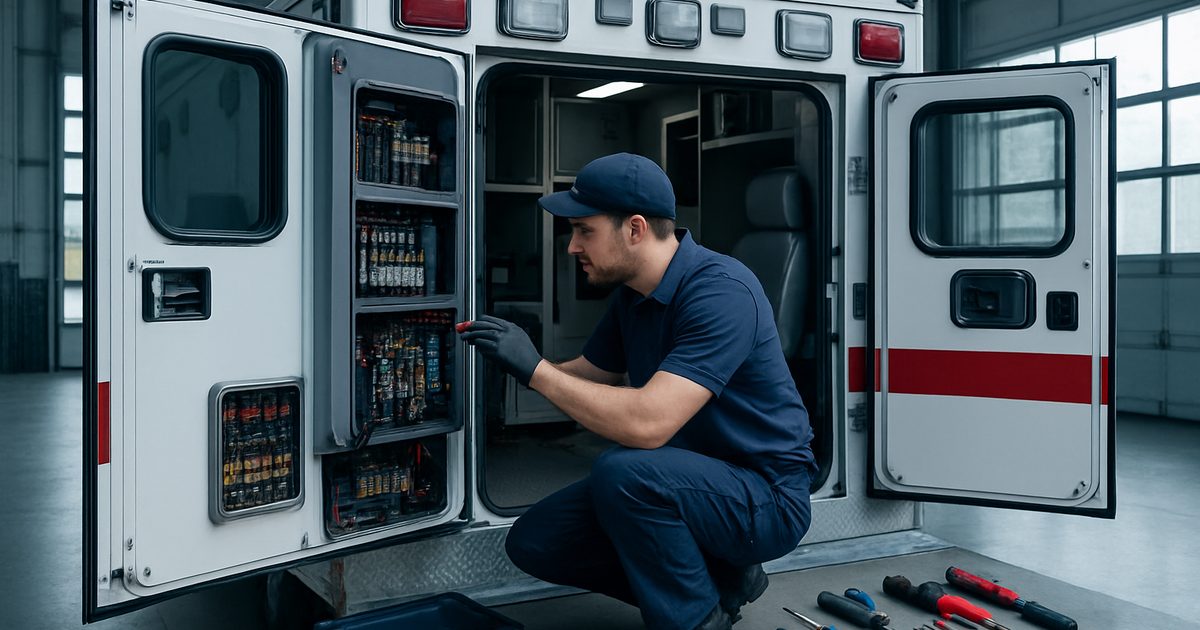
When a rig needs work, the question every fleet manager weighs is simple: fix it here, or send it out? The on-site vs. in-shop ambulance repair decision comes down to one number that matters more than the invoice — how long the truck is out of service.
The hidden cost of a shop visit is downtime
A shop repair rarely costs you just the repair. It costs a tow or a drive, a spot in the shop's queue behind everyone else, and the days the truck sits waiting for a diagnosis before the real work even starts. For a small service running one or two ALS units, a rig out for three days can mean mutual aid, overtime, or a unit off the road entirely.
Where on-site wins
For the work that keeps ambulances in rotation, on-site is almost always faster:
- Electrical diagnostics — parasitic draws, inverters, lighting, and module faults are traced right in your bay.
- Equipment installs — power cots, cot mounts, and device brackets, done at the station without losing the truck to transit.
- Narcotics security — CompX eLock narcotics boxes supplied and installed on the spot.
No tow, no shop queue, and you talk directly to the technician doing the work — not a service writer relaying messages.
Where a shop still makes sense
On-site is not the answer for everything. Heavy chassis work that requires a lift — major brake, suspension, or drivetrain jobs — belongs in a full shop with the right equipment. A good mobile tech will tell you honestly when a job is outside what can be done in the field.
The bottom line
For ambulance electrical, equipment, and security work, on-site repair almost always returns the truck to service faster and cheaper, because it removes the two biggest time sinks: transport and the shop queue. When the goal is fewer hours out of rotation, the shop should be the exception, not the default.
Wondering if your issue is a field fix? Ask us — or read 5 signs your ambulance has an electrical problem.
Rig down? Talk to the tech directly.
On-site ambulance electrical, equipment, and eLock work across Ohio and Pennsylvania. You reach Phil, not a call center.