Stryker POWER-LOAD Installation: Why Professional Installation Matters
Anderson Fleet Service · Kinsman, OH
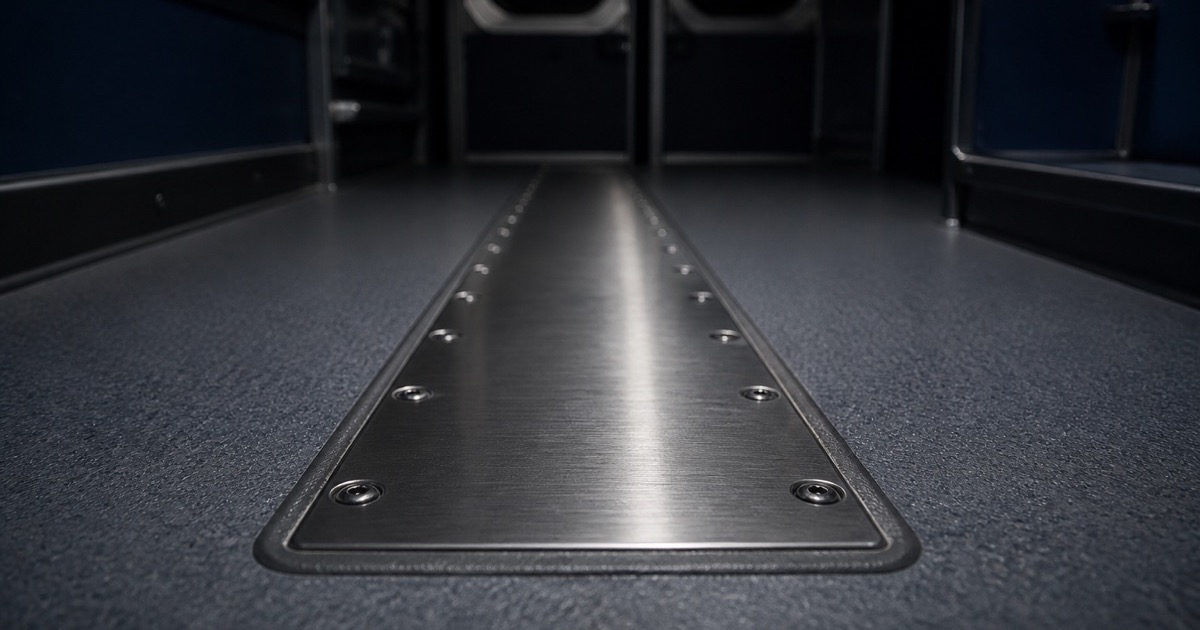
A critical safety system deserves more than a quick installation
The Stryker POWER-LOAD system is one of the most valuable upgrades available for a modern ambulance. Designed to help crews load and unload a powered ambulance cot, POWER-LOAD reduces the physical demands on EMS personnel and helps minimize the risk of back injuries and other musculoskeletal injuries associated with lifting patients.
However, there’s something every ambulance service needs to understand: the safety and reliability of a Stryker POWER-LOAD system depend on more than the equipment itself. The installation is just as important.
At Anderson Fleet Service LLC, we specialize in ambulance electrical systems, equipment installations, and troubleshooting. We’ve seen installations that were done correctly, and we’ve seen installations that created significant problems because critical details were overlooked.
I’ve personally encountered universal floor plates installed with self-tapping screws and other improper mounting methods that left ambulances unusable until the installation could be corrected. These shortcuts aren’t worth the risk, expense, or downtime.
Installing a POWER-LOAD system isn’t simply a matter of bolting a plate to the floor and connecting a power cable. It requires careful measurements, an understanding of ambulance floor construction, proper structural reinforcement, correct electrical installation, and attention to detail throughout the process.
For the basics of matching a cot, fastener and truck, see our power cot and cot mount installation guide.
1. The universal floor plate must be installed correctly
One of the most important parts of a POWER-LOAD installation is the universal floor plate that supports the system.
The plate provides the mounting foundation for the equipment, and its position and installation directly affect how the cot interfaces with the loading system.
Several critical measurements must be addressed during installation:
- Floor recess: The universal floor plate must be recessed exactly 9/16 inch into the floor.
- Rear-door clearance: The plate must be positioned 3 1/4 inches from the rear door, according to the installation dimensions for this application.
- Side-wall clearance: At least 12.5 inches of clearance from the side wall must be maintained so the cot can fit and operate properly.
These measurements aren’t suggestions. They are critical installation dimensions that must be verified against the applicable Stryker installation documentation and the specific ambulance configuration.
If the plate is installed too high, too low, too far forward, or too close to a wall, the result can be interference, improper alignment, or a cot that cannot be loaded and unloaded correctly.
The 9/16-inch recess deserves particular attention. Achieving the correct recess requires accurately preparing the floor while preserving the structural integrity of the mounting area. Simply placing the plate on top of the existing floor is not an acceptable substitute when the installation calls for a recessed plate.
I’ve seen universal floor plates secured with self-tapping screws. That is not the kind of shortcut you want supporting equipment responsible for securing a patient cot in an emergency vehicle.
The mounting hardware and attachment method must be appropriate for the installation and capable of supporting the loads involved.
2. The mounting system must withstand crash forces
A POWER-LOAD system is more than a convenience feature. It is part of the equipment involved in securing and transporting a patient inside an ambulance.
The system is designed around demanding safety requirements, including a 13G crash rating for the applicable system configuration. That performance depends on the complete installation, not simply the presence of a POWER-LOAD unit.
The universal floor plate must be securely attached to a structure capable of supporting the forces transmitted through the system. The plate, mounting hardware, supporting floor structure, and any necessary reinforcement all play a role.
This is where experience with ambulance construction becomes especially important.
An ambulance floor isn’t necessarily equivalent to the solid steel structure you might find in another vehicle. Depending on the manufacturer and body design, the mounting area may include a combination of structural members, wood flooring, metal subflooring, and finished flooring materials.
If the floor structure isn’t rigid enough, additional support plates, brackets, or structural reinforcement may be necessary.
Simply tightening the bolts harder won’t correct an inadequate mounting structure.
The goal is to create a secure mounting foundation that meets the applicable installation requirements and preserves the intended crashworthiness of the system.
3. Every ambulance has its own construction challenges
Although the POWER-LOAD system is designed to work across compatible ambulance configurations, that doesn’t mean every ambulance can be installed the same way.
Different manufacturers use different floor designs, structural supports, and underfloor layouts. Even two ambulances from the same manufacturer may present different challenges depending on their configuration and production year.
For example, some Lifeline ambulances have hollow floor cavities in areas that complicate mounting.
When working with this type of construction, the installer must understand what is beneath the mounting surface before drilling or installing hardware. Longer bolts may be necessary, and the mounting arrangement must be planned around the actual floor structure.
The installer must also consider what lies beneath the floor, including wiring, equipment, structural members, and other components that could be damaged during installation.
Blindly drilling through the floor and hoping to find adequate support is not a professional installation method.
Before any holes are drilled, the mounting area should be inspected and the installation planned around the specific ambulance body.
This is one reason experience with ambulance manufacturers such as Lifeline, Braun, Medix, Demers, Crestline, and other specialty builders matters. Understanding how these vehicles are constructed can make the difference between a successful installation and an expensive repair.
4. Proper electrical installation is essential
The mechanical installation is only half the job. POWER-LOAD also requires an appropriate electrical supply.
The system needs a properly routed power cable connected to the chassis battery supply, with suitable overcurrent protection, including the required fuse.
The installation must account for the electrical requirements of the specific POWER-LOAD model and the ambulance’s electrical configuration.
Important considerations include:
- Correct wire sizing for the load and cable length.
- Appropriate fuse selection and placement.
- Secure electrical connections.
- Protection against abrasion, heat, moisture, and physical damage.
- Proper routing around moving equipment and existing wiring.
- Secure mounting and strain relief.
- Verification of the charging and operating functions after installation.
An undersized cable, poor connection, improperly protected circuit, or poorly routed harness can create problems ranging from intermittent operation to damaged wiring.
Ambulances also contain numerous aftermarket electrical systems, including emergency lighting, radios, inverters, and other patient-care equipment. Adding another electrical load requires attention to the existing installation and the manufacturer’s requirements.
A professional installation should leave the electrical system reliable, protected, and serviceable—not simply working well enough to pass a quick test.
5. Waterproofing the floor is just as important as mounting the plate
One frequently overlooked detail is sealing the universal floor plate into the ambulance floor.
Ambulance interiors are cleaned and disinfected regularly. Water and cleaning solutions can work their way into small gaps around improperly sealed equipment.
Many ambulance floors contain wood or other moisture-sensitive materials beneath the finished flooring surface. Once water begins entering around a mounting plate, it can remain trapped beneath the floor covering and gradually damage the underlying structure.
The consequences may not be obvious immediately.
Over time, moisture intrusion can contribute to swelling, deterioration, weakened flooring, corrosion of nearby metal components, and costly repairs.
The mounting plate must therefore be sealed appropriately to the surrounding floor, using materials and methods compatible with the ambulance flooring and the manufacturer’s installation requirements.
The finished installation should allow crews to mop and disinfect the floor without routinely forcing moisture beneath the plate.
This is particularly important in an environment where infection control and frequent cleaning are part of everyday operations.
A properly installed plate should be structurally secure and appropriately sealed—not just look good when the job is finished.
6. A failed installation can put an ambulance out of service
Consider what happens when a POWER-LOAD installation is completed without proper planning.
The floor plate may be positioned incorrectly. The cot may not align with the loading mechanism. The mounting hardware may not have adequate structural support. The electrical system may be unreliable, or the floor may not be properly sealed.
Any one of these issues can require the installation to be taken apart and corrected.
That means additional labor, replacement hardware, potential floor repairs, and another period when the ambulance may be unavailable for service.
For an EMS agency, vehicle downtime affects more than the maintenance budget. It can interfere with fleet availability and create scheduling challenges for an already busy operation.
Paying for an installation twice is expensive. Discovering that a critical patient-loading system cannot be used when the crew needs it is far worse.
The cheapest installation isn’t necessarily the least expensive installation. Doing the job correctly the first time is what saves money.
7. Testing and verification complete the job
A professional installation doesn’t end when the last bolt is tightened.
The completed system needs to be inspected and tested according to the applicable Stryker installation and service procedures.
That includes verifying the mechanical installation, checking the mounting hardware and electrical connections, and confirming that the cot and loading system operate correctly together.
Clearances must be checked, the mounting arrangement must be verified, and any required structural reinforcement must be properly completed.
The installation should also be checked for interference with doors, surrounding equipment, and the ambulance’s existing interior configuration.
Any deficiencies discovered during testing must be corrected before the vehicle is returned to service.
The objective is straightforward: deliver an installation that meets the applicable requirements and is ready for the demands of daily EMS operations.
Why choose Anderson Fleet Service LLC?
At Anderson Fleet Service LLC, we understand that ambulance equipment installations require specialized knowledge and attention to detail.
We work on ambulance electrical systems, emergency equipment, and specialty installations where reliability matters. Our focus is on doing the job correctly, accounting for the specific vehicle configuration, and avoiding shortcuts that can create bigger problems later.
When it comes to Stryker POWER-LOAD installations, we recognize that the floor plate, mounting structure, electrical supply, and finished flooring must all be considered together.
We take the time to evaluate the installation, identify potential complications, and address the details that can easily be overlooked when someone treats the job as a simple bolt-on upgrade.
Our goal isn’t merely to install equipment. It’s to help EMS agencies maintain dependable ambulances and avoid unnecessary downtime caused by improper workmanship.
Whether you’re planning a new POWER-LOAD installation or dealing with problems from an existing installation, having an experienced ambulance technician evaluate the setup can help identify issues before they become more expensive.
Don’t gamble with your POWER-LOAD installation
The Stryker POWER-LOAD system is an important investment in crew safety and patient handling. Protecting that investment requires more than purchasing the equipment and finding someone willing to bolt it into the floor.
Correct measurements, proper structural attachment, appropriate electrical protection, effective floor sealing, and thorough testing all matter.
Improper installation can lead to equipment interference, structural concerns, moisture damage, electrical problems, and costly rework.
If you’re considering a Stryker POWER-LOAD installation, have it done by a professional who understands ambulance construction and specialty equipment installations.
At Anderson Fleet Service LLC, we provide mobile ambulance repair and installation services throughout Northeast Ohio and into Pennsylvania.
Contact us to discuss your POWER-LOAD installation, evaluate an existing setup, or schedule ambulance equipment service.
Rig down? Talk to the tech directly.
On-site ambulance electrical, equipment, and eLock work across Ohio and Pennsylvania. You reach Phil, not a call center.