On-site ambulance repair
DEA Narcotics Storage Requirements for Ambulances: A Plain-English Guide
Anderson Fleet Service · Kinsman, OH
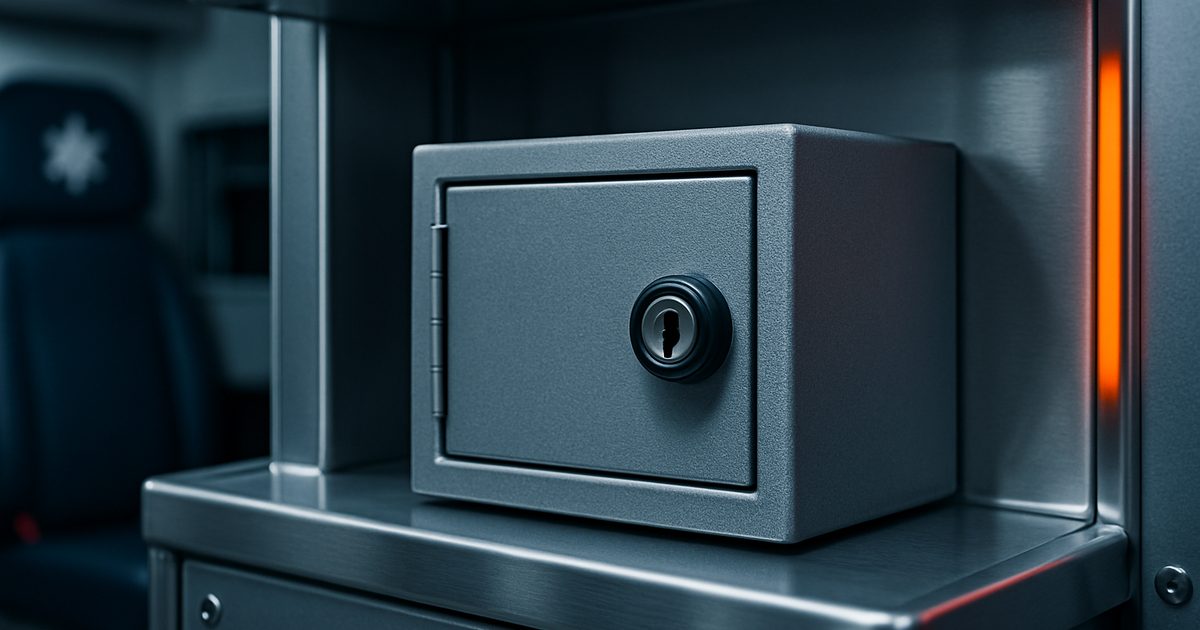
Carrying controlled substances on an ambulance comes with real responsibility. The DEA narcotics storage requirements for ambulances are not a single checklist you can print — they combine federal expectations with your state EMS rules and your medical director's policy. Here is the plain-English version.
This is general educational information, not legal advice. Always confirm the specifics with the DEA, your state EMS office, and your agency's medical director.
The core idea: secure storage and accountability
At a high level, controlled substances must be kept in a securely locked, substantially constructed container, and access has to be limited and accounted for. In practice, for EMS that means two things working together: a lock that keeps unauthorized hands out, and a record of who accessed what and when.
What "secure" usually looks like on a rig
- A substantially built, locked container — not a glovebox or a zip pouch, but a mounted metal box or cabinet that resists tampering.
- Controlled access — only authorized personnel can open it, whether by key, code, or credential.
- An audit trail — documentation of access and inventory so any discrepancy is caught quickly.
- Inventory and chain of custody — counts, waste records, and handoffs that stand up to review.
Why electronic access is becoming the standard
Paper logs and a key work, but they are easy to lose and hard to audit. Electronic locks solve both problems: they restrict access by keypad or proximity credential and automatically log every open, which is exactly the accountability regulators and medical directors want to see. That is why many agencies are moving to systems like the CompX eLock.
Getting compliant without guesswork
As an authorized CompX dealer, we supply and install DEA-conscious narcotics boxes and cabinet locks on-site, with electronic access control and audit-trail logging built in. If you are tightening up controlled-substance storage on your fleet, talk to us — and see how an eLock compares to a standard lockbox.
Rig down? Talk to the tech directly.
On-site ambulance electrical, equipment, and eLock work across Ohio and Pennsylvania. You reach Phil, not a call center.