No Heat! Diagnosing Weak Module Heat on a Lifeline Ambulance
Anderson Fleet Service · Kinsman, OH
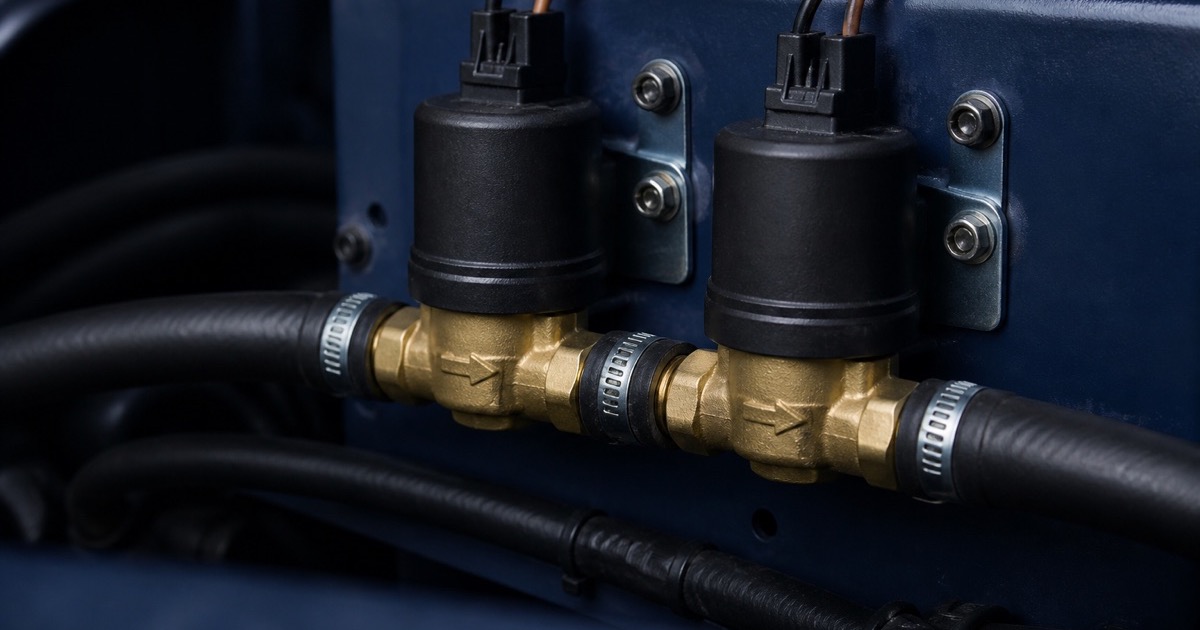
No heat in the module is one of those complaints that gets real important real fast this time of year. Crew’s in the back with a patient, and it’s cold. Had one of these on a Lifeline with no heat or weak heat in the module.
Step 1: Verify the complaint
First thing, always: make sure the problem is what they say it is. Fired it up, ran the module heat. Sure enough, weak to nothing back there.
Step 2: Find the heater valves
On this Lifeline, the heater valves were in the oxygen compartment, on the front wall. With the truck running I put a hand on them.
Both valves were cold.
That tells you coolant isn’t making it back there.
Step 3: Check the coolant
Shut the engine off. Before opening anything, I squeezed the upper radiator hose to make sure there was no pressure in the system. Then I checked the radiator.
It was 1.5 gallons low.
Low coolant will starve the module heater on its own, so that had to get fixed first. Filled the radiator, started it back up and let it run to bleed the system. About 10 minutes in, I went back to the valves.
One of them was very hot. The other one wasn’t. Progress, but not fixed.
Step 4: The valves were on backwards
Here’s the thing about a Lifeline. There are two water valves sitting right next to each other. One feeds coolant into the module, one sends it back out. They’re directional. They only flow one way.
The valve that was hot was the return side. That’s the one that should only see coolant after it’s already gone through the module and cooled off. If that one’s hot and the supply side isn’t, the flow is going the wrong way.
So the hoses were on the wrong valves. Those one-way valves were fighting the flow, only letting a trickle through. That’s your weak heat.
I swapped the hoses on the two valves, and the system worked perfectly. Heat in the module, crew happy.
Takeaways from the field
- Verify the complaint before you start chasing it.
- Check coolant level first. It’s the cheapest fix there is, and you can’t diagnose flow with a system that’s low or full of air.
- Make sure the system isn’t under pressure before you open the cap. A squeeze of the upper hose tells you.
- Your hand is a good tool. Cold valves, hot valves, which one’s hot. It tells you where the coolant is and isn’t going.
- Directional heater valves only work one way. Hot on the return side and not the supply side means the hoses are backwards.
Final word
Two problems on one truck: low coolant and backwards valves. Fixing the first one is what showed me the second. If your module isn’t putting out heat this winter, give us a call.
Getting ready for cold weather? See Winterizing Your Ambulance: Cold-Weather Battery & Electrical Prep and An Electrical Preventive-Maintenance Checklist.
Related reading: No Heat? Ambulance Water Valves Explained.
Rig down? Talk to the tech directly.
On-site ambulance electrical, equipment, and eLock work across Ohio and Pennsylvania. You reach Phil, not a call center.