No Heat? Ambulance Water Valves Explained
Anderson Fleet Service · Kinsman, OH
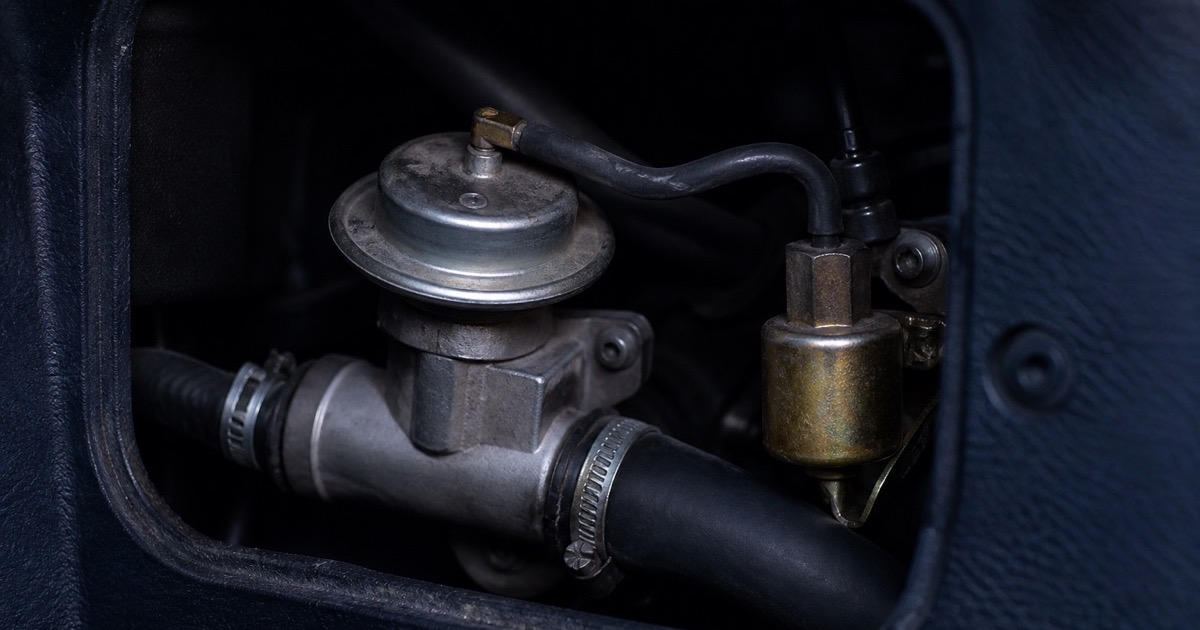
When the module won’t heat, the water valve is one of the first places I look. They all do the same job, but they’ve changed a lot over the years. Here’s a rundown of the types you’ll run into, oldest to newest, and how to tell when one’s bad.
How module heat works
Coolant from the engine runs back to a heater core in the module. A blower pushes air through that core and heats the box.
There are no blend doors in these trucks controlling airflow. The only thing deciding hot or not is the water valve. Valve open, you get heat. Valve shut, you don’t.
1. Vacuum knob (the old style)
The earliest ones were straight vacuum. You had a knob in the module, hot and cold. Turn it to hot, and it sent vacuum to the water valve and opened it up. Simple, and they used that setup for quite a while.
2. Electronic thermostat with a vacuum valve
Next came an electronic thermostat working with a solenoid and a vacuum valve.
The thermostat sends a signal to a vacuum solenoid mounted up near the firewall, usually on the passenger side. That lets engine vacuum run back under the ambulance to a vacuum-operated valve, which opens and lets hot coolant into the module.
3. Electric vacuum pump systems (Braun)
Braun uses an electric vacuum system. Turn the heat on, a vacuum pump kicks on, a solenoid opens, and vacuum goes to a vacuum-operated water valve inside the truck. It’s usually on the back passenger side of the HVAC box. Manufacturers typically leave you an access panel.
Normal: the pump runs for about 1 to 2 seconds and stops. It shouldn’t run again, because the system should hold vacuum. It only kicks on when it needs to.
Bad: you’ll hear it running all the time. Sounds like a little air pump going in the HVAC box. That means the solenoid is leaking or there’s a vacuum leak somewhere.
The most common culprit is a little bronze-colored vacuum solenoid, and you can get one for less than $100.
If you’ve got no heat in a Braun and that little pump is pumping away, it’s probably the solenoid. Worst case, it’s a bad vacuum line, and they’re not very long.
4. Electronic water valves
The newest style is an electronic valve right in the water line, switched by the thermostat. No vacuum at all. Fully electric.
Some trucks have two. Lifelines, for example, have two valves running in opposite directions, one going into the module and one coming out. They’re directional. If one of them fails shut, you’ve got no heat.
A couple things to know about these:
- They’re not one-size-fits-all. They come in a bunch of shapes and sizes, and they work different ways, normally open or normally closed. You can’t grab any water valve and throw it on the truck. You need the one that’s meant for it.
- They’re not cheap. A lot of them run $300 and up.
How to test a water valve
Truck running, heat on. Put a hand on each side of the valve.
- Hot on both sides: coolant is flowing through. Valve’s working.
- Hot on one side, cold on the other: it’s not passing coolant. Valve’s stuck shut or not opening.
If you’re on a truck with two directional valves and only one side’s hot, check that the hoses are on the right valves. I’ve seen them on backwards.
The budget option: a manual ball valve
If the right electronic valve isn’t in the budget, you can put a manual ball valve in its place. Open it by hand for the winter, close it for the summer.
Just don’t forget to close it. If you leave it open, you’ve got no A/C. That heat will overpower the air conditioning, and it’s not even close.
Final word
No heat in the module usually comes down to coolant level, the water valve, or what’s controlling the valve. Knowing which type you’ve got gets you most of the way there. If your module’s blowing cold, give us a call.
More on cold-weather prep: Winterizing Your Ambulance: Cold-Weather Battery & Electrical Prep.
Related reading: Module Blower Only Works Sometimes? Check the Drip Pan.
Rig down? Talk to the tech directly.
On-site ambulance electrical, equipment, and eLock work across Ohio and Pennsylvania. You reach Phil, not a call center.